

Pickled Watermelon Rinds with Tajín
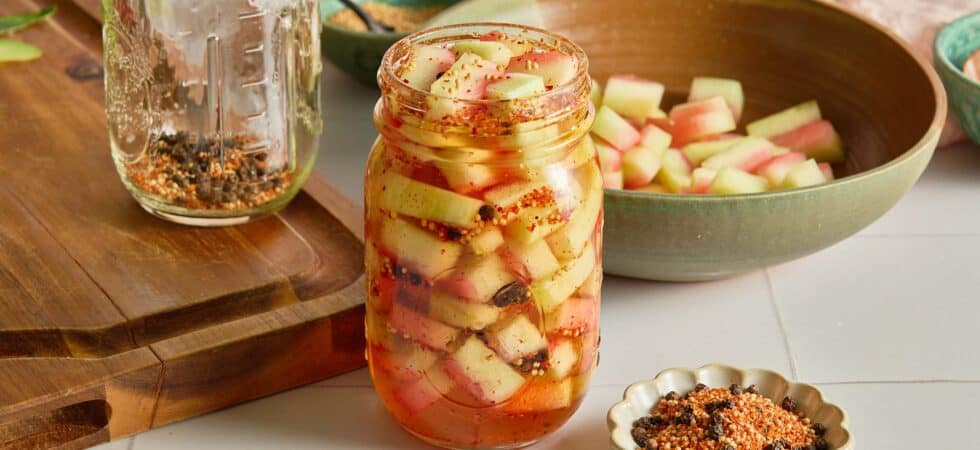
Crispy, crunchy pickled watermelon rinds are one of my favorite go-to summer snacks! I’ve typically seen them at Korean and Indian tables in the form of a kimchi or chutney variation. These pickled rinds use Tajín, for a side dish with a more Mexican flavor profile. Think chamoy and tajín coated cantaritos and you are getting the picture. Additionally, these pickled watermelon rinds retain most of their texture, with just a touch of softening from the brine, unlike other recipes. Good luck prising the jar out of anyone’s hands!
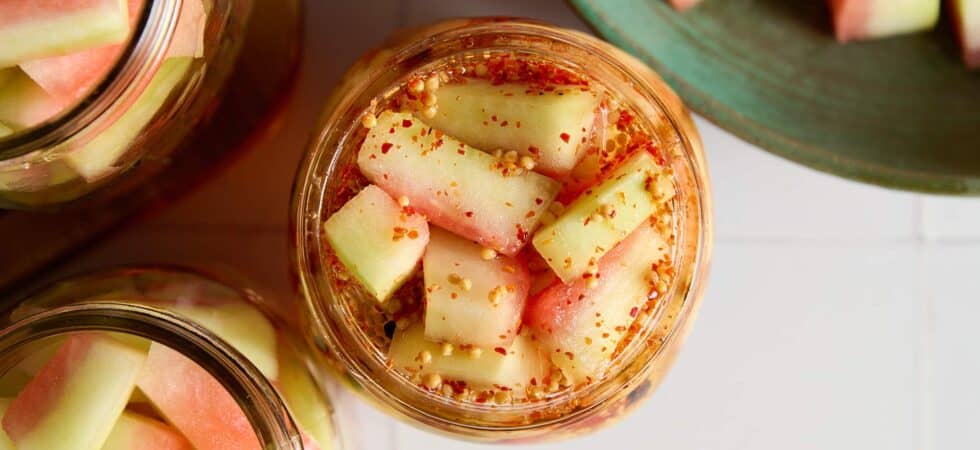
Get the Recipe: Tajín Pickled Watermelon Rinds
Ingredients
- 8 cups watermelon rind, sliced, (about 1/2 large watermelon)
- 3 tablespoons Tajín
- 1½ tablespoons whole black peppercorns
- 1 tablespoon yellow mustard seeds
- 1½ cups distilled vinegar
- 2¼ cups refined, granulated sugar
Equipment
- 1 chef knife
- 1 cutting board
- 1 y-peeler
- 1 kitchen scale (optional)
- 1 small pot
- 1 spatula or whisk (optional)
- 1 1+ quart (32oz or .9L) lidded container (or multiple smaller containers)
Instructions
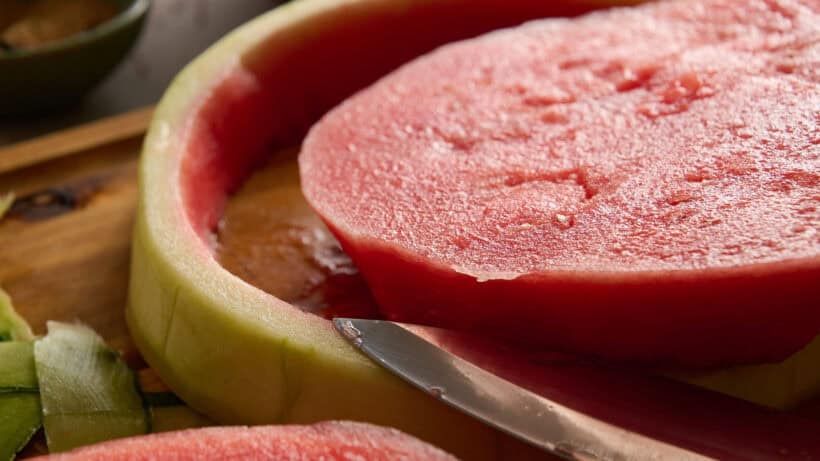
- First cut and peel the watermelon. The easiest way I’ve found to peel half a watermelon is by cutting 1-1.5in (2.3-cm) thick circular discs away from the larger whole piece by piece. (see image below recipe for a visual) Once the slices are made, run the knife between the pink flesh and white rind all the way around the discs to remove the center of the watermelon. (set the watermelon centers aside to cut later or prep them now and refrigerate the pieces in a sealted container.) It’s okay if there is a little pink left on the rinds, it adds a subtle watermelon flavor to the pickled rinds. Next, use a y-peeler to strip away the green part of the rind from each ring. Once peeled, cut the rings into small strips. Fill your pickling container or containers with the fresh cut rind pieces. Then, set those aside and prepare the spices and the brine.
- For the spice blend, measure out the tajín, black pepper, and mustard seeds into a single container and mix them. Set the blend aside.
- Next, fill a small sauce pot with the vinegar and sugar and bring the solution to a boil. Once all of the sugar has dissolved, remove the liquid from the heat and pour it into the watermelon rind-filled container(s) until the liquid can cover the contents. (If the containers are not heat proof, wait for the liquid to cool a bit before pouring.) Next, split the spice blend evenly, according to the number of containers used. Seal the container(s) and give it(them) a shake to distribute the spices throughout the brine.
- Let the container(s) cool on the counter until everything is room temperature. Then, place the watermelon rinds into the refrigerator at least overnight (preferrably 24hrs). Once, the rinds have chilled, open and enjoy.
Notes
- These rinds stay very crisp. If you are looking for a softer texture, boil the watermelon rinds for 5-10 minutes, until they start to turn translucent. Then add them to the container(s) and continue the recipe as instructed.
- If the cutting the watermelon into discs seems too difficult, cut it however you would normally cut the fruit. Then, slice the leftover rind pieces into strips to make peeling easier.
- I like to use either 3, 16oz(480ml) glass mason jars or 1, 32oz (960ml) mason jar to hold the pickled rinds.
- I do keep pickle weights in my jars to ensure the rinds are submerged, but it’s strictly to lengthen the rinds’ shelf-life. As is, the pickled rinds are good for a month or more. (See FAQs for spoilage identifiers.)
Frequently Asked Questions
Why don’t you boil the watermelon rinds like most recipes?
Boiling the watermelon rinds softens them quite a bit. I like my pickled watermelon rinds to stay crisp unless I am using them for a marmalade.
If I wasn’t using Tajín I would most likely add this step into the instructions. But Tajín has plenty of salt and lime to add to the brine. If the watermelon is pre-salted and then Tajín is also added to the jars later, the pickled rinds will be too salty later. Even if a recipe says to rinse the salt off the rinds at some point, there is a good chance the salt has imbued the rinds enough to unbalance this recipe.
How can you tell if homemade pickles went bad?
It’s good idea to check any homemade pickled fruit and veggies before eating them. To do this, open the container and take a look at the liquid and the food itself. If the liquid is cloudy, streaky, fizzy or the color itself has drastically changed, those are all signs of spoilage. Additionally, if you see any discoloration or mold on the food, chances are, its gone bad. Smell can also be an indicator that the food is no longer good. The smell will no longer be briney or smell of individual ingredients. The scent tends to muddle and go sour when the pickled food is no longer fresh. Hope this helps!
Pickled fruits and vegetables last so long because of their use of vinegar, salt, and/or sugar as main components to the brine.
To begin, the concentration of acetic acid in vinegar, even at small amounts, slows the growth of bacteria. This inhibition is further increased in the presence of sodium chloride (salt) or glucose (sugar). Both of which are in this recipe!


There may be affiliate links in this post. A Little Spoon, LLC is a participant in affiliate advertising programs designed to help content creators earn fees by linking to affiliated sites.