

Bitter Giuseppe
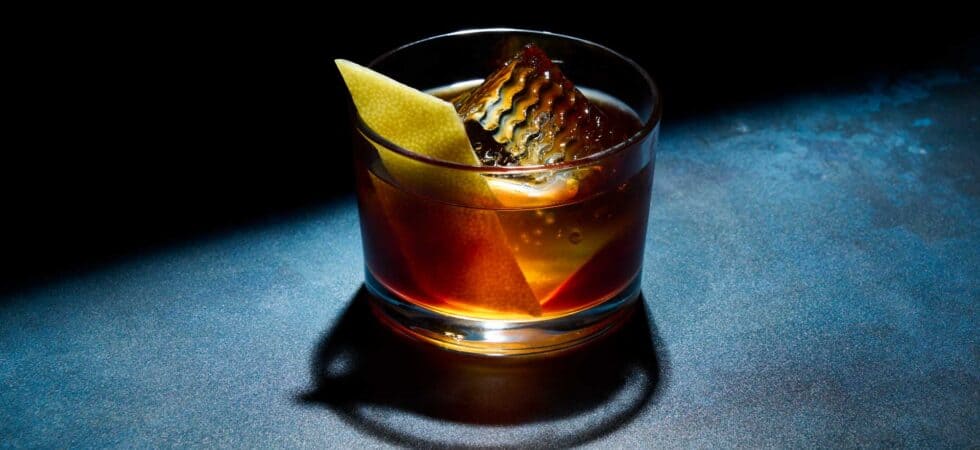
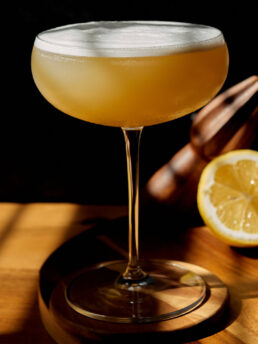
Looking for low-ABV cocktails that give negroni but feel a little more sophisticated than a spritz; The Bitter Giuseppe is your new best friend! The Bitter Giuseppe cocktail, created by Chicago bartender Stephen Cole, revolutionized the use of Cynar (bitter amaro) as the star of a cocktail and not a supporting ingredient. Stir Cynar with Carpano Antica Formula sweet vermouth, a touch of fresh lemon juice, and orange bitters. The flavor profile is a lovely triple balance among bitter, sweet, and acidic tastes and tops out at an ABV in the high teens (slightly above wine and far below anything with distilled spirits).
For those wondering, Cynar is pronounced (chee-NAHR). It’s an Italian bitter liqueur made from artichoke leaves and 13 other herbs and spices. Cynar’s name comes from “artichoke”, in Latin Cynara Scolymus. It is on the sweeter, and I would argue, brighter end of the amaros. That touch of sweetness blends really wells with lots of sweet vermouths. (Yes, I list substitutes for Carpano Antica Formula sweet vermouth in the FAQs.) Cynar is also strong enough to hold its own against other ingredients that would mask or dilute it. IMO, it’s a great addition to your liquor cabinet.
Unfortunately, I didn’t find where the cocktail’s name comes from during my research of the drink. My best guess is that it’s named after the nephew of Antonio Carpano, Giuseppe Carpano. Giuseppe’s name graces the label of the Carpano Antica Formula sweet vermouth originally used in this cocktail. From the late 1700s to the early 1800s Antonio Carpano invented and popularized sweet vermouth. He sold his distillations from his wine shop until his death. Then Giuseppe took over the business from his uncle and expanded the production. This expansion allowed for the global reach of the company’s vermouths. The combination of a “bitter” amaro and “Giuseppe’s” hard work feels like the perfect combination to me. What do you think?
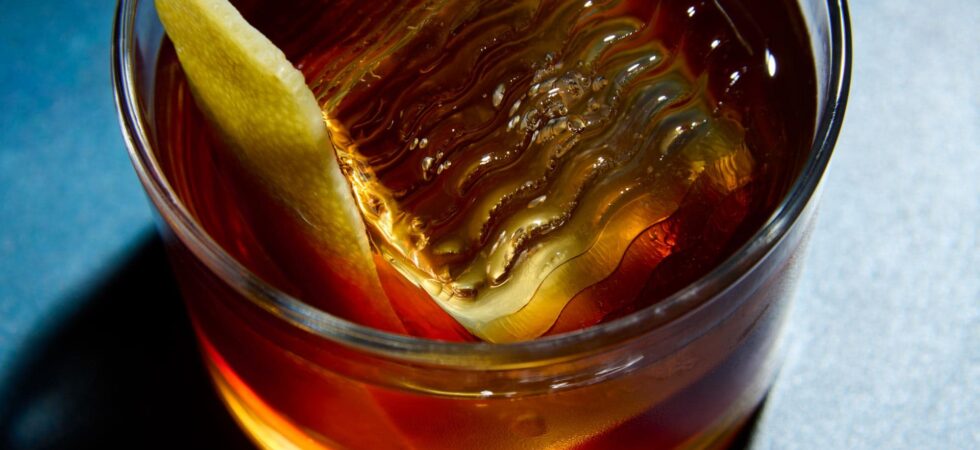
Get the Recipe: Bitter Giuseppe
Ingredients
- 1/4 ounce or 1/2 tablespoon fresh squeezed lemon juice, (about 1/2 a lemon)
- 2 ounces Cynar
- 1 ounce Carpano Antica Formula sweet vermouth
- 6 dashes orange bitters
Equipment
- 1 rocks glass chilled
- 1 y-peeler or cheese slicer
- 1 paring knife
- 1 cutting board
- 1 citrus reamer or juicer
- 1 Fine Mesh Strainer (optional)
- 1 cocktail mixing glass
- 1 small measuring cup, spoons, or jigger
- 1 Bar spoon or utensil with a long thin handle
- 1 Hawthorne Strainer
Instructions
- Place a rocks glass in the freezer 15-30 minutes before making the cocktail.
- When ready, clean the skin of an lemon. Then, use a y-peeler, cheese slicer, or even a knife to create a roughly 1in x 2in (2.5cm x 5cm) long strip of lemon peel. Clean up the edges with a knife and gently cut away any pith that may be attached to the underside of peel. Set your garnish aside.
- Next, cut, squeeze, and measure the lemon juice. Strain the juice directly into the cocktail mixing glass with a fine mesh strainer, to get rid of the pulp. (This is an optional step for us neurotics.) and set it aside.
- Remove the chilled rocks glass from the freezer. To it, add a single, extra large ice cube. Set the glass aside for the ice to temper while you build the cocktail.
- Measure and pour the other ingredients into the mixing glass. Add a few medium ice cubes and stir with a bar spoon for 30-45 seconds, to chill and slightly dilute the cocktail. Strain the cocktail into the prepped rocks glass with a Hawthorne strainer.
- Express your prepared lemon peel over the drink by holding the top and bottom of peel horizontally and facing out. Squeeze down to release the oils. Rub the outside of the peel against the rim of the glass and slip it into the drink.
- Sip and enjoy!
Notes
- If you forget to chill your glass, just fill it with ice and set it next to your workstation while you prep the cocktail. Dump the ice right before shaking the cocktail to have it ready.
- I love a cheese slicer for peeling citrus. Especially when the peel is meant to be expressed into a cocktail. This cheese slicer is my favorite.
- Store your vermouth in the refrigerator for 1-2 months after opening. Remember, vermouth is wine with liquor in it. While the spirits slow down the fermentation that occurs when wine is exposed to air, it won’t last forever.
- If you taste the Bitter Giuseppe after stirring and it’s still a little too strong, keep stirring. This isn’t about being cool and dealing with the bitterness of the Cynar, it’s about balance. The dilution during chilling is meant to mellow the bitter amaro.
Nutrition
Frequently Asked Questions
An amaro is a style of Italian liqueur that bitter and sweet in taste. Traditionally amari are made by infusing an alcoholic base (neutral spirit, grape brandy, or wine) with botanical ingredients. Botanicals include herbs, citrus peels, fruits, roots, spices, bark, leaves, and flowers.
Vermouth is a fortified and aromatized apéritif wine. Producers make it by fortifying a base wine with a stronger neutral spirit, typically brandy, which extends its shelf life. They then infuse the mixture with a variety of herbs, spices, and barks. European regulations require producers to include wormwood (also commonly found in absinthe) for a product to qualify as vermouth. American regulations do not impose this requirement, allowing producers to create modern vermouths with a much wider range of flavor profiles.
Vermouth comes in several styles, ranging from extra dry to sweet, though the three primary categories are sweet, dry, and blanc. Italian producers traditionally make sweet vermouths, which are usually red. To qualify as sweet vermouth, the product must contain more than 130 grams of sugar per liter (about 1 cup of sugar in a little more than 1 quart of liquid). This sugar balances the bitter flavors found in amaros such as Campari, Cynar, Suze, etc. French producers typically make dry vermouths, which have a pale straw color. Blanc (French) and Bianco (Italian) vermouths have a debated origin, but both combine the sweetness of red vermouth with the pale color of dry vermouth.
Although many people associate rosso, or “red,” vermouth with red wine, producers make most vermouths with white wine. They create the characteristic red color by adding caramelized sugar or caramel coloring. Because the tannins in red wine interfere with flavor development and production, producers rarely use red wine as the base.
It’s all about the total mass if the ice cube compared to its surface area with stirred cocktails. Use normal sized cubes for the inital stir. Once you balance the Bitter Giuseppe, a large ice cube keeps it tasting the same for as long as possible. The smaller the individual cubes (think pellet ice or crushed ice) the faster they will melt and further dilute your cocktail. Bleh! It’s not make or break, but large ice cubes are better for anyone looking to elevate their home bar.
P.S. Want to take your ice to the next level?
Check out a clear ice system from a company like Berlinzo. The difference between them and a company like True Cubes, which I also have, is the way the molds release. True Cubes’ system forces you to push the ice out of a cup-like, thin silicone mold. Berlinzo has thick silicone molds held together by the base. Once the ice freezes, the mold comes apart completely. It’s sooooo much easier to take the ice out!
The creator of this cocktail used Carpano Antica Formula sweet vermouth, so that’s what I used. However, I have seen lots of variations where the vermouth specifically was changed.
There’s a bar in Portland (highly recommend!) called the Teardrop Lounge. They created a variation of the Bitter Guiseppe with Punt E Mes instead of Carpano Antica. According to their menu they also added a touch of saline and lemon oleo. All round fantastic changes IMO, having tasted it myself.
So, if we are staying in the same vein as Punt E Mes and Carpano Antica, we can also determine that pretty much any Vermouth di Torino would be a welcome substitute. Both Martini & Rossi and Cocchi make sweet vermouths of this style. I also think there’s a place for Cocchi’s Dopo Teatro Vermouth Amaro here. Though the “amaro” in the title also tells us that this does have a touch of bitterness to it. A bit of lemon oleo alongside the lemon juice could do wonders if Cocchi Dopo Teatro is used.
To batch 8 Bitter Giuseppe cocktails at once, mix 2 cups (480ml) of Cynar, 1 cup (240ml) Carpano Antica, 2 ounces (60ml) of fresh lemon juice and 1ounce (30ml) of orange bitters.
I highly recommend one of two options when batching this Bitter Giuseppes:
1. Batch the whole cocktail no more than 12 hours before an event, so the lemon juice stays fresh.
2. Batch the cocktails without the lemon juice and then add it as you pour individual drinks. Each cocktail, without lemon juice, should be just over 3 ounces (93.75ml to be exact).
Now, let’s talk dilution before you jump into batching…
Do you plan to pour your pre-chilled cocktails straight from the refrigerator or freezer? If so, add in 1 cup (240ml) of water to the mix before chilling. This acts as the stirring step, where you chill and dilute to balance the cocktail. Without the water, your cocktail will be very strong.
If you want to find your personal preference for dilution follow these steps:
1. pour the drink as written;
2. stir with ice until you are happy with the flavor;
3. pour the liquid back into a measuring cup;
4. subtract the original measurement from what is now in the glass,
That amount is your water “dilution” preference amount. Scale from there! Mine is between .75-1oz (22.5-30ml) per drink.
If you’re adding the cocktail to a beverage dispenser or carafe with ice, this step can be skipped. Just make sure to add the mixed cocktails and ice 15-30 minutes before serving. This way, there is time for dilution.
Okay, I think that’s everything you need to know before batching this cocktail. Go forth and prosper!

There may be affiliate links in this post. A Little Spoon, LLC is a participant in affiliate advertising programs designed to help content creators earn fees by linking to affiliated sites.